Mirado Mortel · Robotics researcher & engineer

Structure-aware robotics, from motion to navigation.

I study how a robot's mechanics, the geometry of its environment and the information carried by sparse sensor signals can be used directly for locomotion and navigation.

My work connects nonlinear dynamics, nonholonomic mechanics, reduced-order modeling, estimation and control — from mathematical analysis to reproducible simulation and physical robotic systems.

Available for postdoctoral and robotics R&D positions from September 2026; an October start is also possible.

Locomotion, navigation and sensing share a structural question.

What useful behavior is already organized by the physics of the robot, the topology of the environment or the structure of a measured field — and how can a model expose it without erasing it?

01 · Mechanics

Dynamics and control of locomotion

I study relative-periodic, resonant and hybrid motions in nonholonomic robots: how exact reduced return coexists with open pose, how finite-amplitude families deform, and how selected forced responses can be maintained and navigated locally.

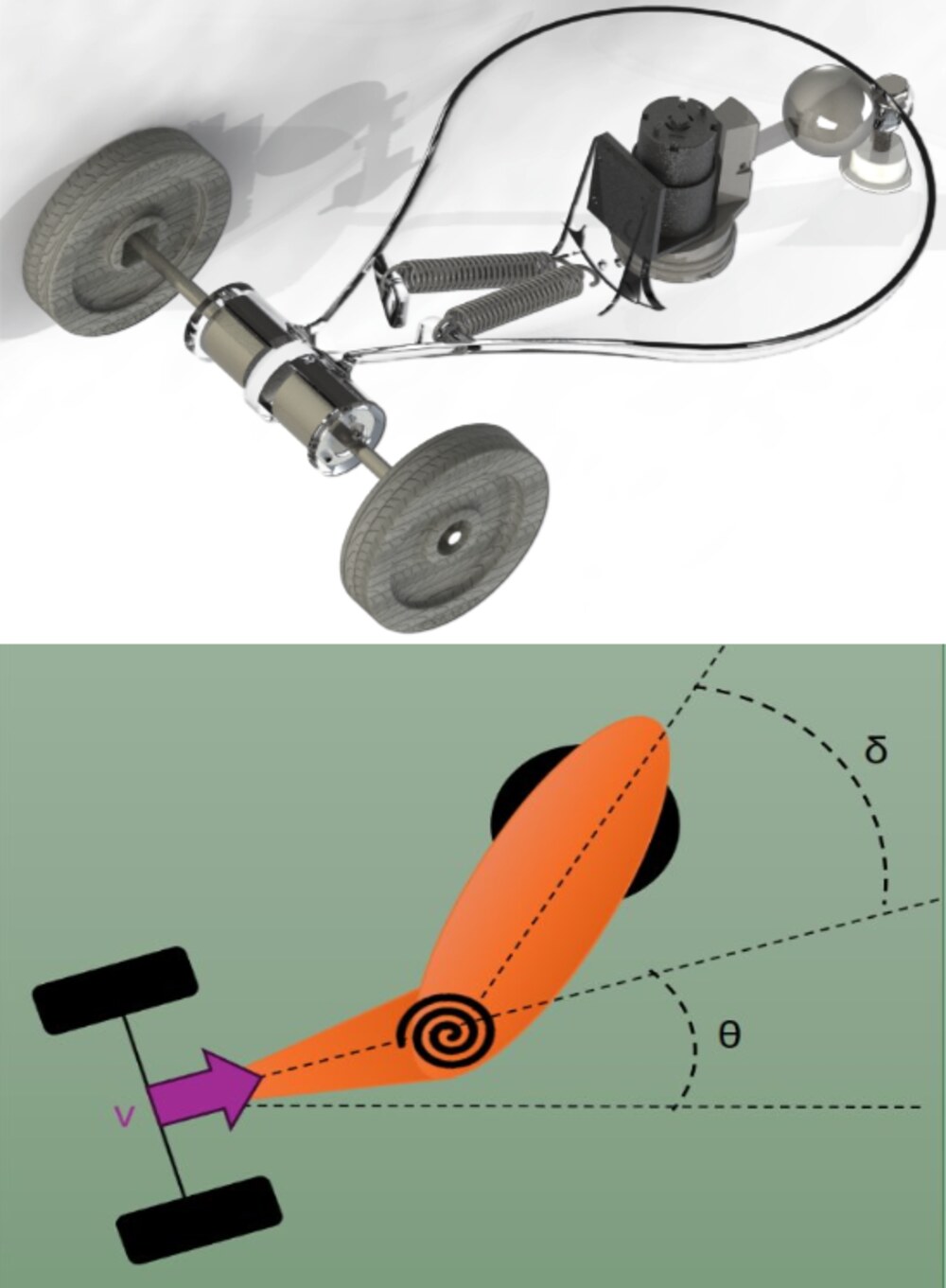
Three mechanical regimes Schematic. Relative-periodic articulated locomotion, a flexible skate-constrained beam and collisionless walking share a structure-aware modeling question — not a single proof or control law.

PhD research · preprint & peer-reviewed precursor

Natural locomotion families

Exact reduced return, open reconstructed pose and mechanics-based return certificates under explicit hypotheses.

Dedicated thesis page

Published foundation · active control study

Resonant locomotion & phase locking

A parameter-distinct forced-response map, exact cycle work balance and local phase–speed navigation; quadrature is used only as a local marker.

OCEANS paper ↗

Validated reproduction · active extension

Collisionless walking

High-accuracy reproduction of a conservative three-link collisionless gait, alongside an active NLM extension on a separate scalar internal-oscillator walker.

Advanced numerical study

CKte Beam

A reduced Kirchhoff–Cosserat beam with a nonholonomic skate constraint, simulated faster than real time with single-rotor go-to-goal and waypoint motion.

02 · Navigation

Intrinsic representations of the environment

I develop navigation prototypes that use the geometry and topology of an environment directly, together with estimation from sparse measurements.

From geometry to intrinsic coordinates Schematic. Metric geometry is converted into local foliation cells and Reeb-like connectivity; scalar estimation is studied separately on a circular one-dimensional prototype.

Research prototypes · synthetic & simulated evaluation

Foliation-based navigation & scalar SLAM

A 2D foliation prototype builds intrinsic cells and Reeb-like connectivity; a separate circular SLAM study estimates pose and a sparse signed map from noisy odometry and one scalar intensity measurement.

03 · Sensing

Minimal perception through structured fields

I study what a compact sensor can infer when the physics of its measurement field is modeled explicitly.

A compact sensor with a precomputed forward model Schematic. In a two-dimensional electro-quasi-static conductive model, incident and adjoint fields provide a precomputed sensitivity relation for fast, linearized predictions.

Modeling study · fast-simulation prototype

Artificial electric sensing in water

A two-dimensional electro-quasi-static model and adjoint-derived sensitivity matrix for rapid evaluation of a compact three-electrode sensor.

Natural Locomotion Families

My PhD asks which repeatable locomotor motions are admitted by a mechanism before a complete joint choreography is prescribed. It connects conservative relative- periodic families, a conditional scalar exchange theorem, maintained forced responses and local chart navigation while keeping their evidence levels distinct.

Start with the structure. Keep it visible through the pipeline.

I use the same working logic across mechanics, navigation and sensing, while adapting the mathematical tools and the level of validation to each problem.

  1. 01

    Physical, geometric or sensory structure

  2. 02

    Interpretable reduced model

  3. 03

    Return, continuation & evidence audit

  4. 04

    Control or inference

  5. 05

    Reproducible simulation & robotic systems

Current hardware direction: embedded design and current-loop simulation toward physical tracking of maintained responses. The thesis evidence itself remains numerical.

From models to integrated robotic systems.

Design, instrumentation and testing across biped locomotion, field inspection, assistive robotics and an aerial–underwater vehicle.

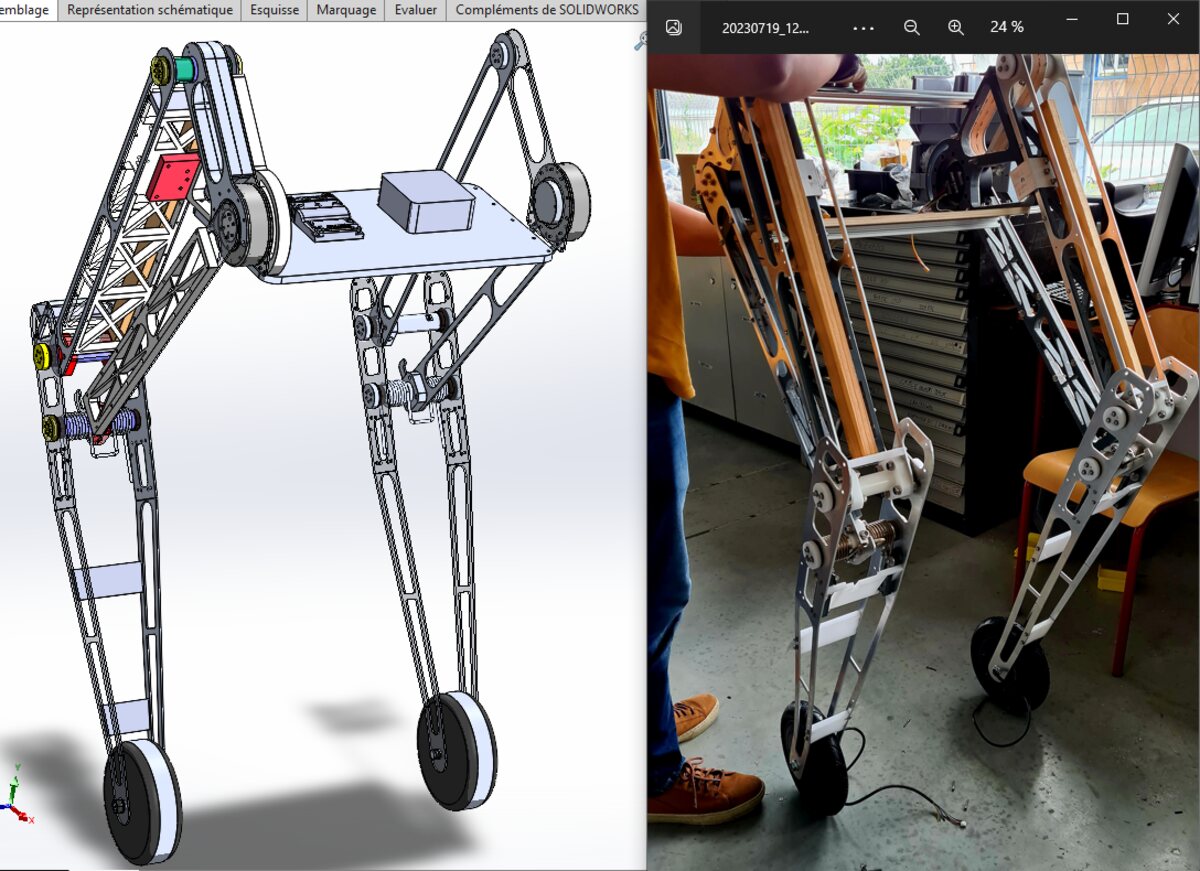
EquiLeap wheeled biped CAD and physical prototype

Built and tested · 2023

EquiLeap

I designed the four-bar architecture and Lagrangian model of this 1.2 m wheeled biped, then integrated its structure, actuation, IMU and Hall sensing, and real-time control.

Project report ↗
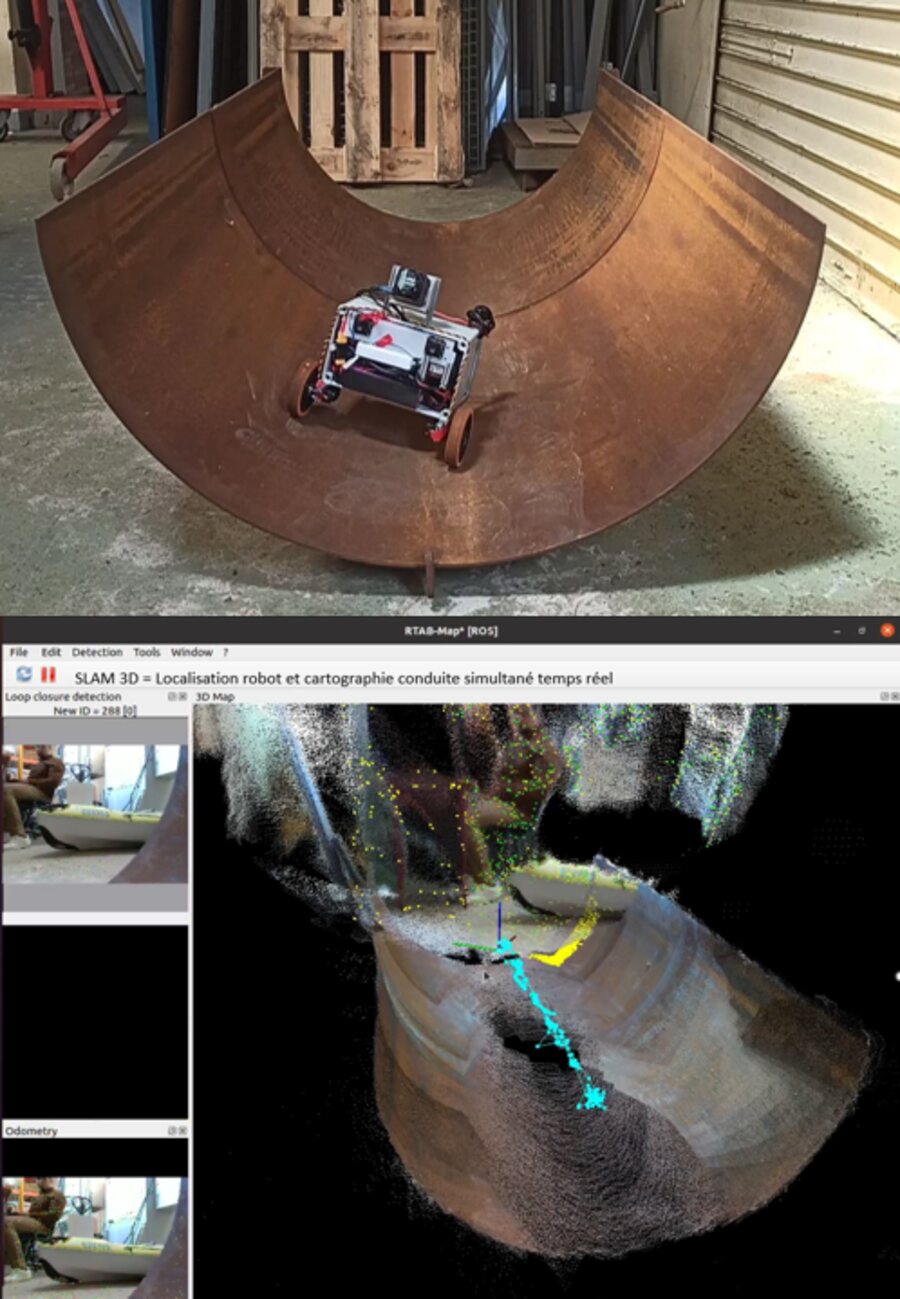
Hydraulic-pipe inspection system and RTAB-Map reconstruction

Industrial R&D · EDF · 2022

Hydraulic-pipe inspection

Visual SLAM with RealSense, IMU, ROS and RTAB-Map, followed by 3D reconstruction and curvature-based pipe classification.

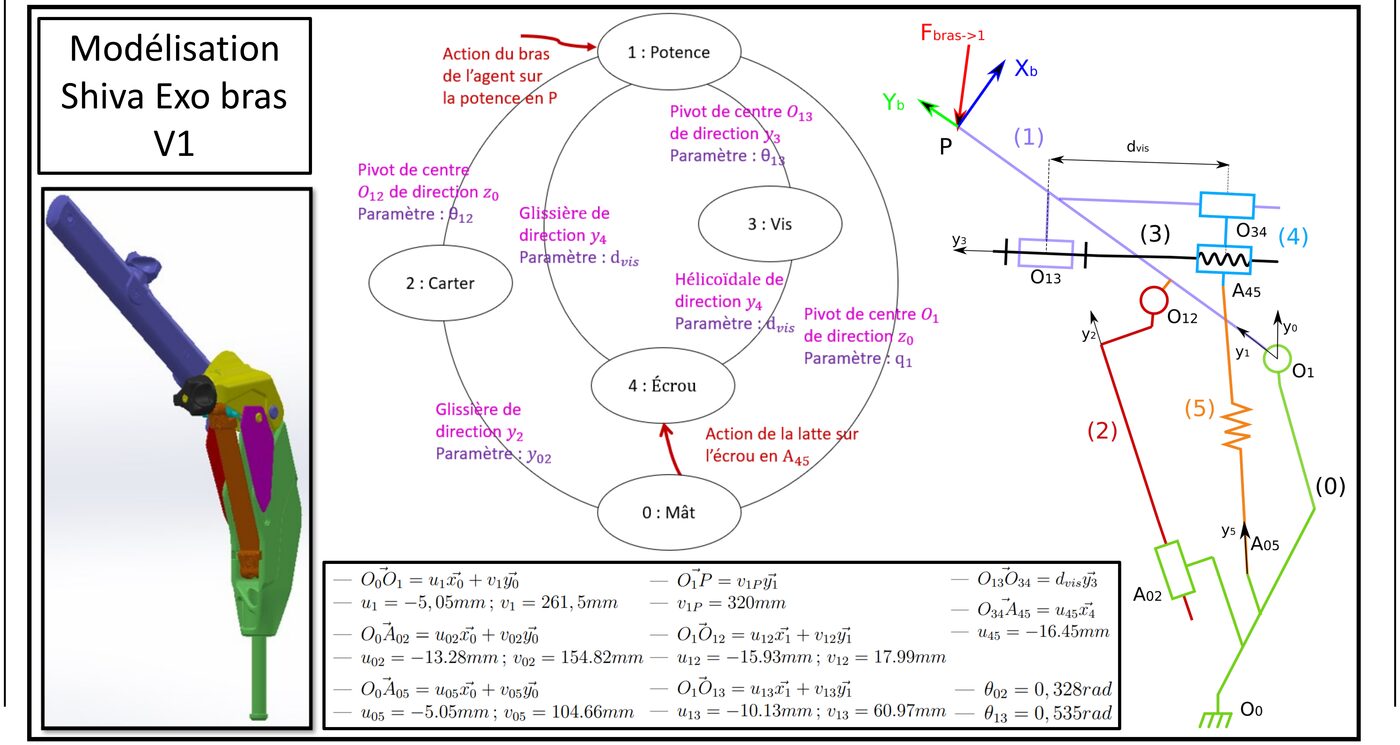
Shiva Exo V2 assistive exoskeleton model and test setup

Modeling & test bench

Shiva Exo V2

Buckling-spring characterization, Arduino/Simulink test bench, Simscape Multibody model and variable-assistance concept.

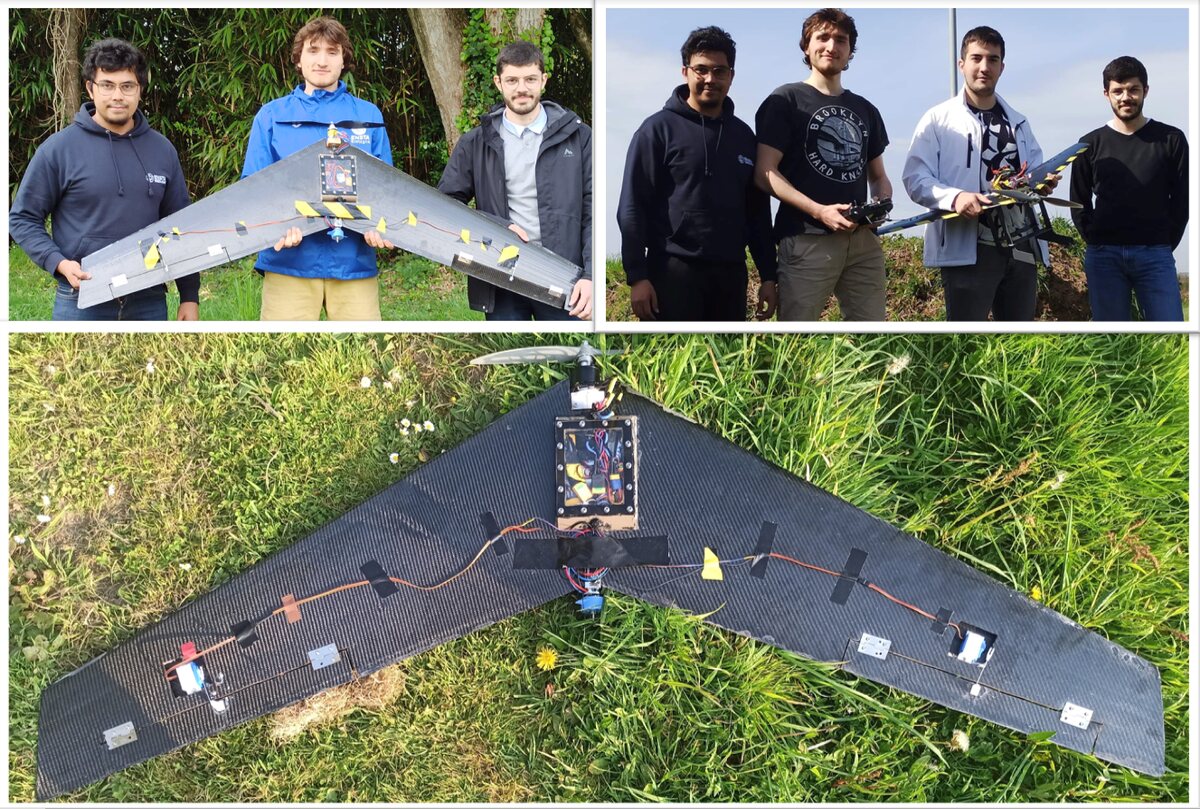
Cinclus-23 aerial-underwater vehicle and project team

Mechatronic lead · built and tested · 2021–2022

Cinclus-23

I led the mechatronic design of a carbon/epoxy fixed-wing vehicle integrating Pixhawk, Raspberry Pi and MAVLink. The prototype was tested in flight, underwater and through air–water transitions.

Selected research outputs

Publications before 2026 are indexed under Mirado Rajaomarosata.

2026 · Preprint

Natural Locomotion: Principle and Method

Mirado Mortel, Luc Jaulin, Lionel Lapierre, Simon Rohou

arXiv ↗

2025 · Mechatronics 110

Natural efficient gaits from Nonholonomic Locomotion Nonlinear Normal Mode (NL-NNM): The Pendrivencar case

Mirado Rajaomarosata, Luc Jaulin, Lionel Lapierre, Simon Rohou · 103366

DOI ↗

2025 · IEEE OCEANS

Energy-Efficient Nonholonomic Fish Robot: Nonlinear Forced Oscillations

Mirado Rajaomarosata, Luc Jaulin, Lionel Lapierre, Simon Rohou · pp. 1–7

DOI ↗

Researcher, engineer and teacher.

I am completing a PhD in robotics at ENSTA / Institut Polytechnique de Paris, within Lab-STICC, advised by Luc Jaulin, Lionel Lapierre and Simon Rohou.

My background combines mechatronics, robotics and dynamical systems. I trained at ENS Rennes, ranked first in the Robotics MSc at ENSTA, hold the French agrégation teaching qualification, and teach computer vision, 3D vision and C++.

Research
Nonlinear dynamics · nonholonomic systems · locomotion · intrinsic navigation · bio-inspired sensing
Methods
Physical modeling · continuation · reduced-order models · estimation · mechanics-aware control
Implementation
Python · C++ · ROS · MATLAB/Simulink · Simscape · computer vision · SLAM
Recognition
JJCR Best Poster, 3rd prize · 2025
Distributed Intelligence Challenge, 3rd prize · 2023

Available from September 2026; an October start is also possible.

I am looking for a postdoctoral or robotics R&D position where physical modeling, computation and control remain connected.